
AMIRI MX1 Sneaker Italian Denim Craft
AMIRI for Men: Structuring a Wardrobe That Holds Together
Because AMIRI is a Los Angeles house resting on denim that is hand-finished, deconstructed and visibly repaired, that fact sits at the centre of any buying plan. Prices here are high enough that a measured piece-by-piece approach serves you better than grabbing whatever is available. Here, amiri clothing is treated as a limited number of anchor pieces, not an inventory of everything available. Every figure quoted is an observed market price from 2026 retail listings, not an official price list. The target is a rotation that feels planned at three very different spending levels. It assumes a handful of pieces rather than a full closet.
What the Purchase Signs You Up For
By the house’s own account the start is 2014, when Mike Amiri established the label in his hometown of Los Angeles; the CFDA gives the same year. A December 2014 press release, the earliest contemporaneous document, puts the founding at 2013 alongside the Los Angeles concept store Maxfield, which leaves the year plainly contested. The first release was an exclusive capsule at Maxfield, and that alone explains why early pieces are difficult to turn up. The work started with Amiri hand-crafting stage pieces for what the brand and the CFDA describe only as legendary Los Angeles performers, and while retail editorial has named specific rock clients, the house has not. He still holds the majority; the minority stake rests with the Italian group OTB, chaired by Diesel founder Renzo Rosso, and it was acquired in 2019 on undisclosed terms. Although it has shown at Paris Fashion Week from 2018 and appears there twice a year, it remains menswear-first and American, with womenswear arriving in 2021.
The Three Anchors
A workable version of amiri men’s dressing comes down amiri to three anchors, one pair of jeans, one pair of shoes and one piece of jersey. Each carries a different share of the brand’s identity and fails differently if you choose badly. Denim is where the craft is most visible and where the money goes. In footwear, the bones motif that runs across every category is what is legible from across a room. Jersey leaves the work to the logo, which makes it the simplest place to buy too much. Take one of each in that order and something wearable exists long before you have spent an outfit’s worth.
Denim First
The MX1 is the signature piece, a skinny-fit jean cut from Italian stretch denim, hand-distressed and repaired with pleated ovine leather, observed at $1,090. The Stack, observed at $750, is the obvious entry point into core amiri jeans; the inseam is intentionally long and engineered to concertina at the ankle. The extra length is design, not defect, and it is no excuse to size down. The Thrasher is the purest hand-distressed expression, abrasion and repair without the leather panel that defines the MX1, while the Shotgun carries blown-out, sanded-edge holes in straight-leg and skinny versions. The Carpenter, Washed Baggy and MA Fit silhouettes are the more generous answer to a skinny cut that does not suit you, observed between roughly $705 and $1,345 before markdowns. Bandana and Crystal are treatments applied across these models, not fits in their own right.
Then the Shoes
The Skel Top Low is the model the brand itself calls its house signature sneaker, a leather basketball silhouette with hand-cut bone appliqués in contrast topstitching. It is observed at $650 on the official site, having released at $590 in August 2020, so articles quoting the lower figure are stale. Made in Vietnam, as the footwear line generally is, and that is nothing to read into. The Skel Court is its own model, canvas and retro-court in shape, observed at $690, and the Stars Court replaces the bones for star appliqués, refreshed for Pre-Spring 2026. Here the MA-1 names a sneaker, observed at $799, and not a bomber jacket, even though the designation belongs to military outerwear in other contexts. For a boot, the Ryder spans $1,090 in leather, $1,190 in suede and $1,290 python-embossed.
Then Jersey
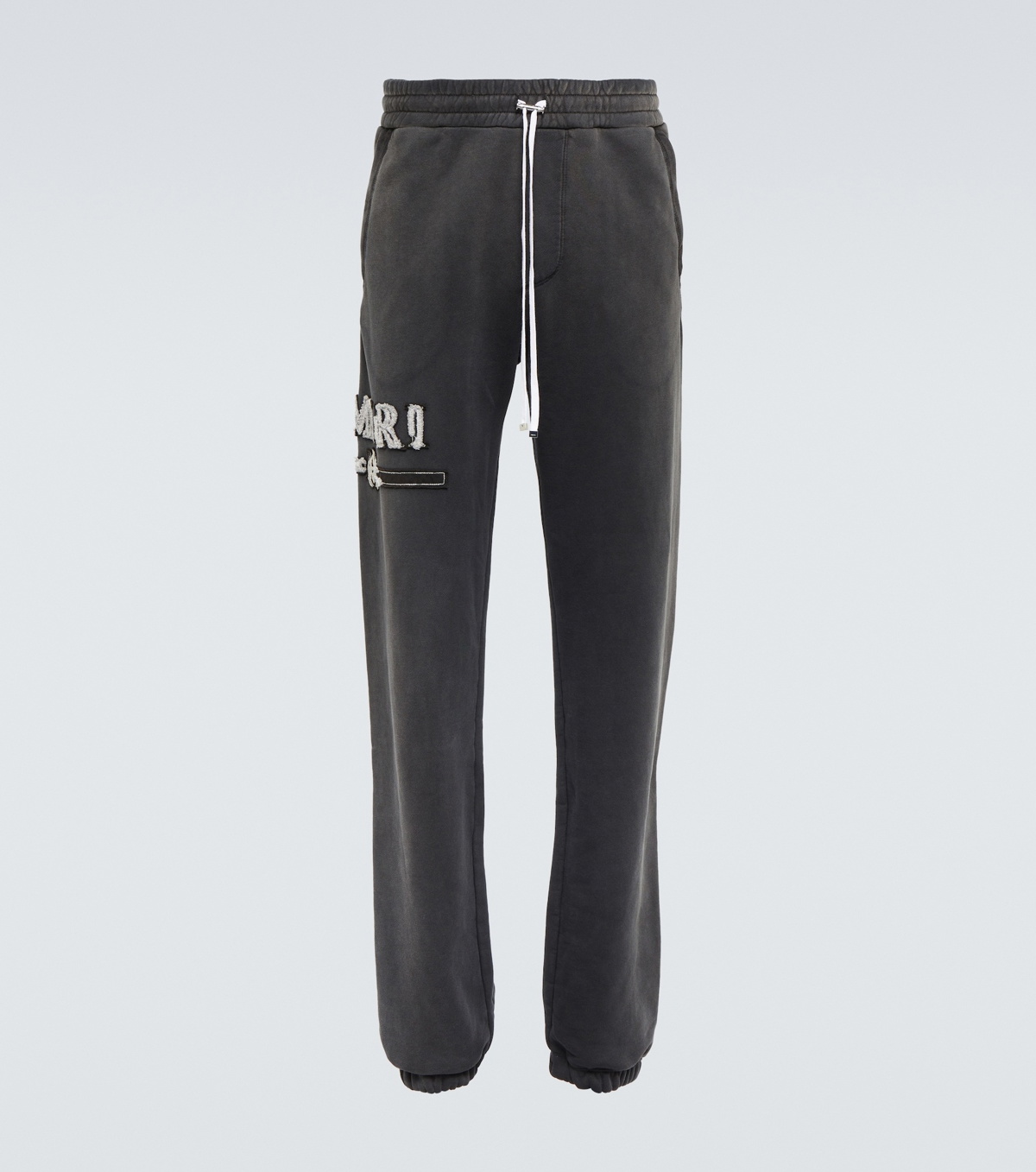
Take the MA Core Logo Hoodie as the baseline: cotton, carrying the MA icon and core logo, described as a normal fit and observed at $650. Made in the USA, exactly as the MX1 and Stack jeans are, it is the case where the manufacturing story survives inspection. Because an amiri hoodie sits among the most counterfeited shapes in the line, provenance carries the most weight than anywhere else. Tees run from roughly $425 for simpler graphics to about $930 for heavily worked pieces at authorised retail. The MA Core Logo Tee is not the MA Bar Logo Tee, though the two are forever mistaken for each other: Italy for the first, Los Angeles for the second. Zip hoodies with varsity patchwork have been observed above $1,300, which is jacket money, so buy the plain one first.
Three Budget Routes
Three routes to the same wardrobe, costed very differently, are set out below from observed market prices rather than any official price list. The first route pays full price for new stock through the brand’s own channel, paying for certainty. The second waits for authorised sale periods, which is realistic because discounting here is structural rather than occasional. Pieces are marked down by roughly forty to seventy percent in season at multi-brand stockists and again through off-price arms. The third combines a single new anchor with secondhand, which reduces the bill sharply but puts authentication risk on you. In the abstract none wins, because the trade is money against certainty and patience, and the anchor order remains as given.
| Route | Anchor set | Observed outlay | Main trade-off |
|---|---|---|---|
| Full price, official channel | Skel Top Low, Stack jean, MA Core Logo Hoodie | $750, $650 and $650, in that order | Top cost, cleanest provenance, whole size run |
| Authorised sale season | The same trio, previous season | Some 40 to 70 percent off list at multi-brand stockists | Incomplete size runs, older colours |
| One new item, the rest secondhand | New sneaker, secondhand denim and jersey | MX1 asking prices observed near $400 to $840 against $1,090 retail | Authentication risk is yours |
Fit Notes That Should Change What You Buy
Everything in this section is buyer-reported and retailer-guide material, because the brand does not publish complete garment measurements style by style. Fit guides call the core skinny jeans, meaning MX1, MX2, Thrasher and Stack, close to spray-on, and they are cut deliberately close. Waists run true to the labelled size, while the leg is what causes returns; buyers with muscular thighs or calves commonly report going up one or two sizes. Because ready-to-wear runs slightly trim, the standard advice is one size up; the exception is anything already named oversized, where sizing up compounds. The Skel Top Low is reported true to size, the brand advises rounding a half size to the nearest whole size, and official sizing runs from 40 to 48 in European numbers. Do not extend that note to the rest of the shoe line, since no consistent reporting exists for the other models.
Buying Without Getting Burned
There is exactly one official e-commerce channel, the brand’s own website, alongside roughly thirty-three owned boutiques, several marked as coming soon. Trade reporting puts the standalone count at about thirty-one, and much larger numbers in circulation, including a claim of one hundred and ninety-five stores, conflate wholesale doors with owned shops. Authorised multi-brand stockists include Saks Fifth Avenue, Neiman Marcus, Nordstrom, Bergdorf Goodman, Maxfield, Harrods, Selfridges, SSENSE, Mr Porter and Mytheresa. Farfetch is a nuanced case, absent from that official online list yet carrying deep stock through partner boutiques that are themselves stockists. If you are typing buy amiri online, the stockist page is the reference to use, with the caveat that it is not closely maintained and still names a retailer that closed in 2024. Because there is no outlet, online or physical, a site presenting itself as one is not the brand, and the only genuine discounted stock sits in authorised sale sections and off-price arms.
Extending the Rotation Later
Once the three anchors are in place, useful additions change the shape of an outfit rather than repeat it. Flannel counts as a founding pillar; a bleached quad-motif flannel has been observed at $1,290, outerwear money for sleeves that are not a hoodie. Denim outerwear follows naturally as the fourth piece: repair work jackets and studded truckers observed between roughly $1,815 and $1,880 at list, lower on sale. Varsity jackets shout the most and date the fastest, observed above $2,300 at list. Hats, small leather goods, eyewear and bags all sit within the accessories side of the line, but belts are not a standalone category. Kids’ pieces through to handbags now sit under the name amiri, yet the wardrobe that works stays narrow: buy slowly, keep the invoices, and let the denim carry the outfit.